BIND
Baryonic INpainting with Deep learning — a conditional flow-matching model that paints baryons onto dark-matter-only simulations.

BIND (Baryonic INpainting with Deep learning) is a conditional flow-matching model trained on the 1024 paired hydrodynamical and dark-matter-only simulations of the CAMELS SB35 suite. Given a dark-matter-only halo, it generates the corresponding dark matter, gas, and stellar mass fields — conditioned on the full 35-dimensional ΛCDM and IllustrisTNG galaxy formation parameter space.
Applied halo-by-halo to full N-body volumes and ray-traced, BIND produces convergence, optical depth, and Compton-y maps whose statistics match full hydrodynamical simulations to within the precision of upcoming surveys. The trained models, generated halos, and map suites are released as open-source tools.
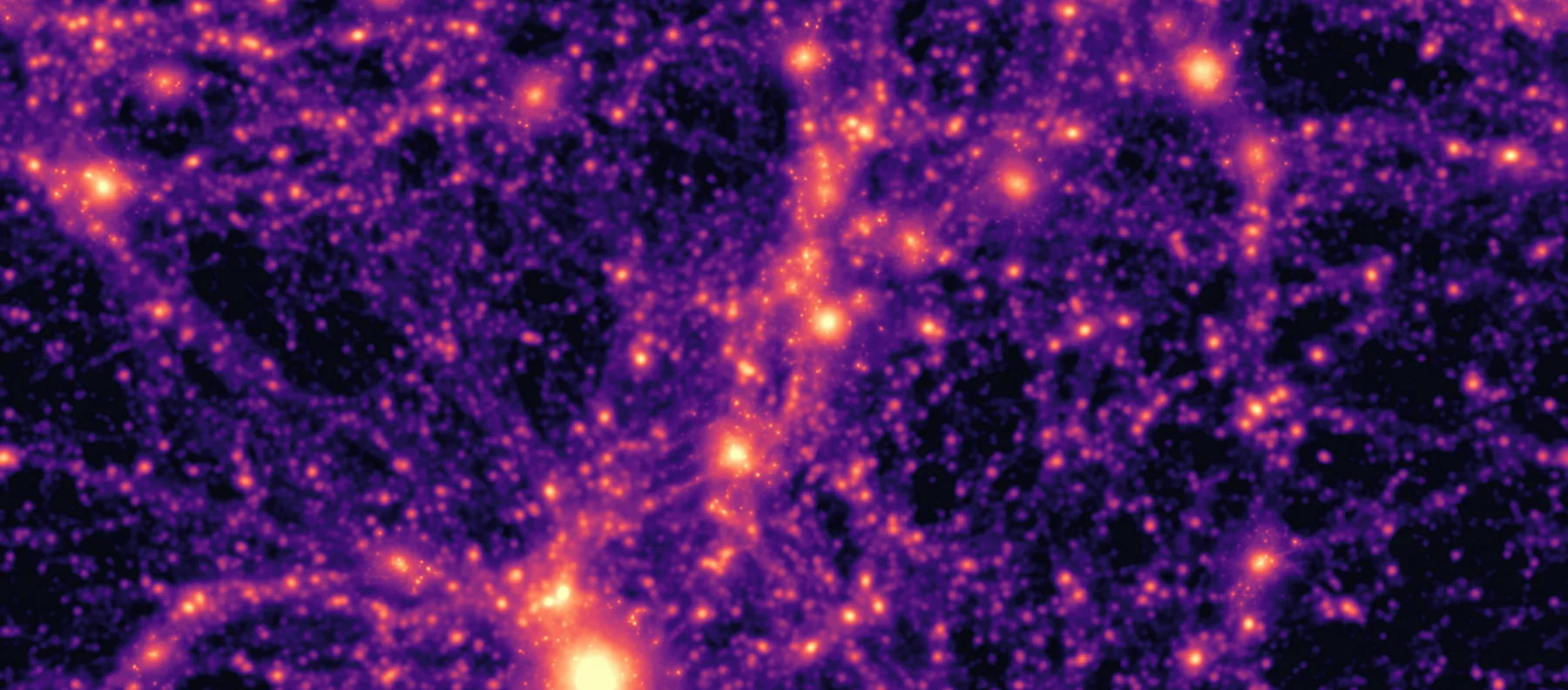
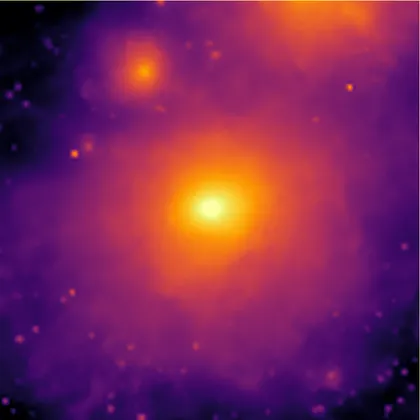
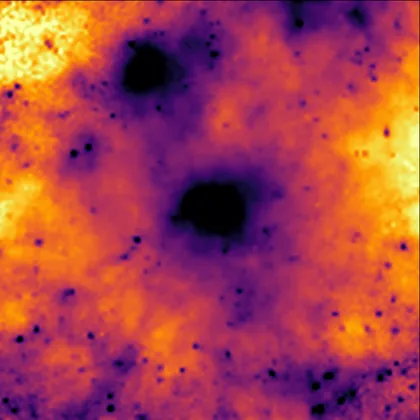
One input, seven fields
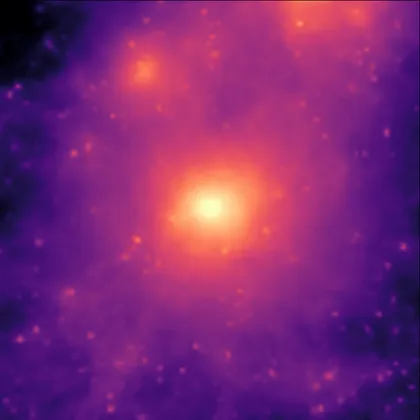
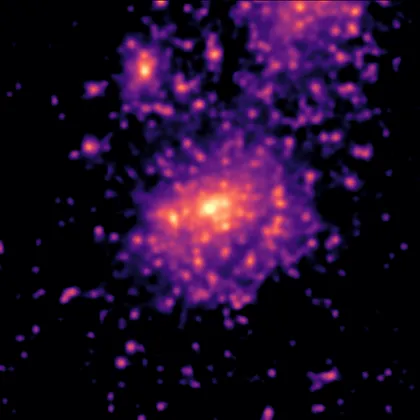
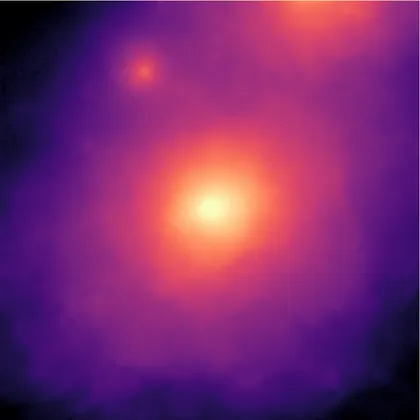
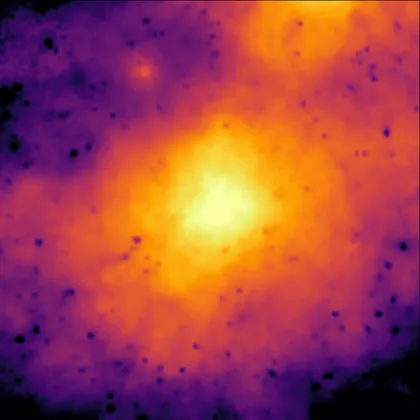
From a single dark-matter-only conditioning field, BIND generates every baryonic channel at once — masses and thermodynamics — for the same halo in one draw:
The papers
- BIND (Baryonic INpainting with Deep learning): A Field-level Emulator for Galaxy Groups and Clusters — the model: training, validation, and halo-level performance. Download PDF
- BINDing the lightcone: A suite of astrophysical ray-traced weak lensing and SZ maps — the maps: 1000 pseudo-independent realizations across the IllustrisTNG galaxy formation prior. Download PDF
Turning the astrophysical dials


BIND is conditioned on every IllustrisTNG galaxy formation parameter, so the same halo can be regenerated under different astrophysics. Here the same dark-matter-only halo is painted while one feedback parameter sweeps across the full SB35 prior (cyan tick) with everything else — including the initial noise — held fixed:
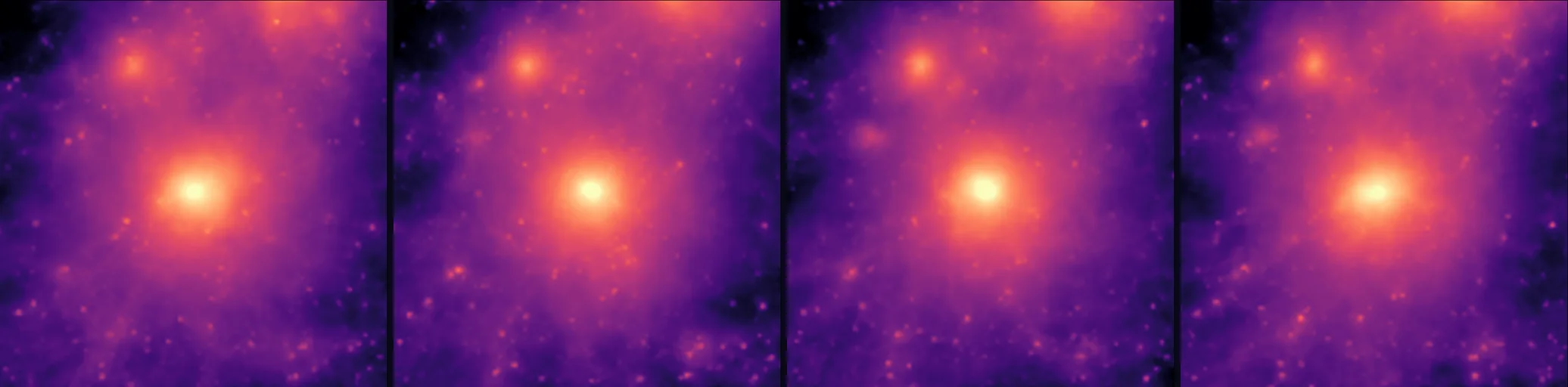
And because BIND is generative rather than deterministic, every draw is a new plausible realization — same halo, same parameters, four different draws:
Does it get the physics right?
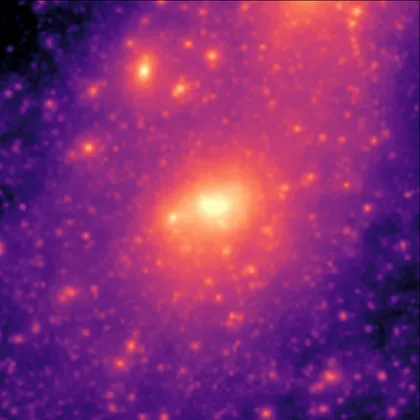
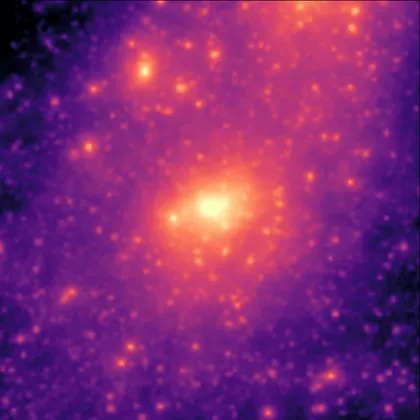
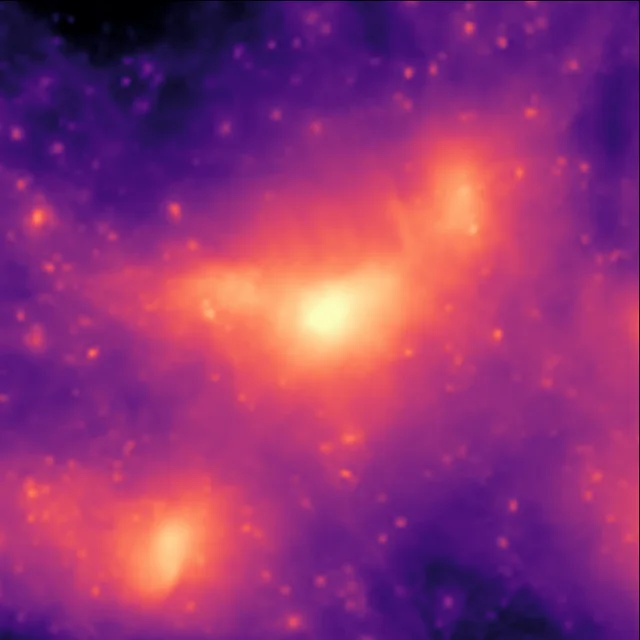
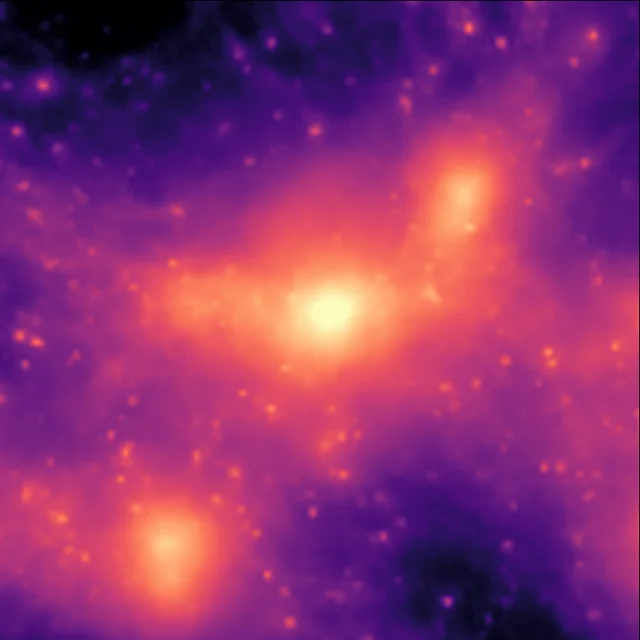
Start with the eye test — the same merging cluster, once from the full IllustrisTNG-300 simulation and once drawn by BIND from the dark-matter-only input alone, on a shared color scale:
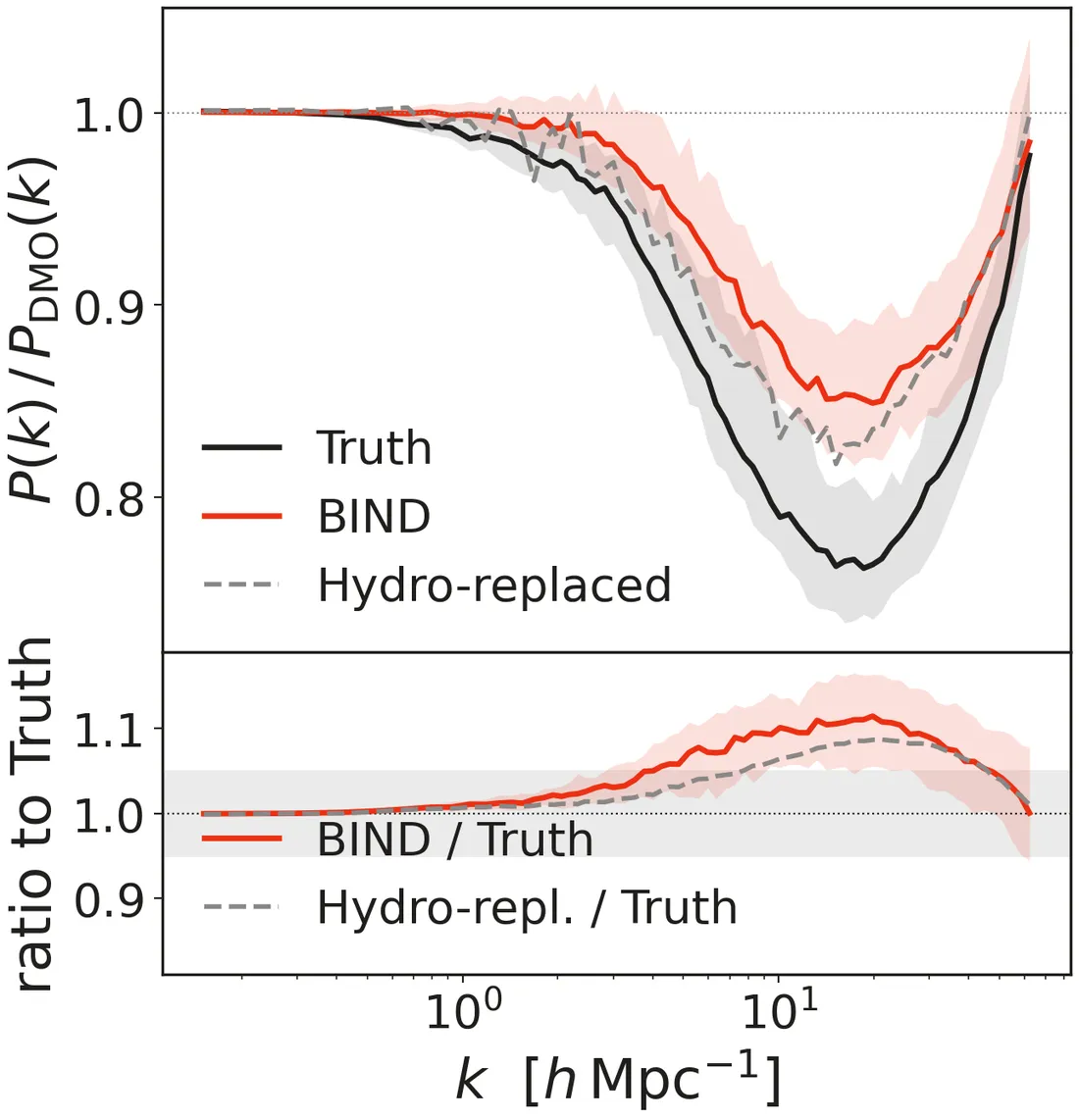
Beyond looking right, the generated halos reproduce the target statistics. Pasted back into an N-body volume, BIND recovers the projected matter power-spectrum suppression to the accuracy ceiling set by pasting in the true hydrodynamical halos themselves:
Try it live
The explorer lets you tune cosmological and astrophysical parameters with sliders and watch BIND generate halo projections in real time, running inference on a live GPU.